
The curative petition and other legal remedies still available to Yakub Memon are part of his rights as a prisoner condemned to death. Does the Maharashtra government want to deprive him of these rights, asks Jyoti Punwani.

Thursday's savage murder of writer Avijit Roy in Dhaka raises troubling questions about religion-inspired terror in Bangladesh.

'The answer is no, the entire country's is.' 'So why such obsession with Delhi?' 'But the most powerful people in India live here: The prime minister, civil servants, Supreme Court judges, MPs, diplomats, dadas of the media...' 'If they can't deal with their own problem, what chance does the rest of the country have, with its foul air, dying rivers, frothing lakes, and crumbling mountains?' says Shekhar Gupta.

A former law intern, who accused ex-Supreme Court judge A K Ganguly of sexual harassment, has hit back at him for denying the charges and hinted that she may file a police complaint.

The development is significant for Nestle since arguments in the Bombay High Court over testing and sampling went in the company's favour, too.
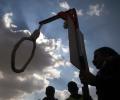
Has death penalty in the statute served as a deterrent for heinous crime?
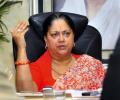
'You have to do good work and also do good politics.' 'I think that part was missing, communication was an issue, but we have bridged that gap.'

Chief Justice of India Ranjan Gogoi on Monday said it was in "our best interest" to heed the advice of the Constitution as not doing so would result in a "sharp descent into chaos".

Vaid, a 1986-batch IPS officer, was unceremoniously removed as police chief late on Thursday night.
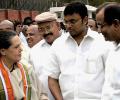
In the 2009 election, P Chindambaram the Sivaganga seat by a narrow margin. Then the Congress was in alliance with the ruling DMK. This time his son Karti is battling the seat with the alliance. India abstention at the UNHRC on an anti-Lanka resolution will further fuel Tamil anger against the Congress party. This leaves the finance minster sulking and his son facing an uphill political debut, says N Sathiya Moorthy.

'This is not the handiwork of ordinary sub inspectors and constables.' 'If the police claim there was a scuffle between them and these five men, then how come none of the policemen were killed, or even hit by a bullet?'
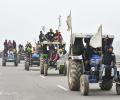
'Agri reforms need to go beyond the limited concerns of these three laws in improving agriculture productivity in cereal and crop diversification and production patterns.'

Will Indian democracy benefit from the potential that Shashi Tharoor stores in his mind, spirit and intellect? Or will it be the saga of another leader who promised much but delivered too little, asks Dr Sudhir Bisht.

Every river is a living person, argues Gopal Krishna on the basis of the recent Uttarakhand HC verdict.
Two suspects have been arrested and police say the case is a fallout of a monetary dispute.

G Sreedathan interviews Dinanath Batra, president of Siksha Sanskriti Utthan Nyas and national convener of Siksha Bacho Andolan, who shot to fame after he was instrumental in getting American scholar Wendy Doniger's book on Hinduism pulped.

Shah claimed that BJP was sensitive to the problems being faced by people queuing up outside the banks and ATMs but said they must realise that the step had hurt 'those sleeping over hoards of black money three thousand times more than the people on the streets'.

Biometric authentication is based on the unscientific and questionable assumption that there are parts of human body that does not age, wither and decay with the passage of time.

India questioned the functioning of Pakistan's notorious military courts.

The Supreme Court on Friday said it will await the government's stand in its endeavour to examine a plea to legalise passive euthanasia by means of withdrawal of life support system to terminally-ill patients.

It is time to shrug off the ideological shackles about the way we work, play and live, says Ajit Balakrishnan.
'I don't think there is a need to order a fresh investigation into the complaint against Modi & Co. As the amicus curiae Raju Ramachandran said in his report to the Supreme Court, the existing material is more than sufficient to prosecute Modi and other high-ups of his regime,' Manoj Mitta, author of the book The Fiction Of Fact-Finding: Modi and Godhra tells Rediff.com's Prasanna D Zore.

Justice Chelameswar led three senior judges to an unprecedented press conference, mounting a virtual revolt against CJI Dipak Misra.

'Wild animals lived in their natural environment.' 'So, viruses could not be communicated.' 'Then came mass production and mass quartering of animals -- whether it be poultry, pigs and cattle -- which gave rise to bird flu, SARS and the mad cow disease.' 'Vast amounts of animal produce are also being flown from one part of the world to another, which has helped to spread the virus.' 'All these changes have led to a new and deadly mutation of the virus that has immobliised human beings.'

Read the full transcript of President Obama's State of the Union address on Wednesday at the US Capitol in Washington.

Asaduddin Owaisi opens up to T S Sudhir on his party's plans for the elections in Uttar Pradesh next year and why he thinks both the Bharatiya Janata Party and the Samajwadi Party have vitiated the secular atmosphere in the state.

'The consolation is that in recent years, the focus at the time of the anniversary has been increasingly shifting from Indira Gandhi's assassination to the plight of the thousands of innocent Sikhs who had been killed in retaliation,' Manoj Mitta, co-author of When a Tree Shook Delhi: The 1984 Carnage and its Aftermath, tells Prasanna D Zore/Rediff.com.

Atal Bihari Vajpayee would seek to placate the hawks in the RSS by stating that the writing of history should not be one-sided. At the same time, he would project a moderate 'Nehruvian' image of himself as the archetypal liberal politician who would strive to attain a balance between conflicting viewpoints. A fascinating profile of the former prime minister and Bharat Ratna by Paranjoy Guha Thakurta and Shankar Raghuraman.

'They are acquiring agricultural land almost free of cost promising an illusory rise which is worse than a chit fund scheme.' 'When I went there on a fact-finding mission, we found that one third of the land they plan to acquire is the best agricultural land in the country.'

A spirited turn at the mic by Mahua Moitra, first-time MP from Trinamool Congress, in which she listed the "signs of early fascism", has been hailed as the "speech of the year" on social media.

'If the BJP thinks it is going to overnight transform Bengal into Madhya Pradesh, sorry, that's not going to happen because I have faith in our ethos and culture.'

'Growth is predicated on the misery of large sections of people.' 'Maybe Hindutva will be used to suppress any such unrest.'

"Why is it that whenever there are no political overtones to a case, the CBI does a good job?" he said.
'Today, there is pervasive fear in society; an uncertainty of what might happen.' 'This has forced Muslims to shrink further into mental ghettos, with many considering extreme measures like pretending to change their identity.'

'A new doctrine now needs to be evolved for a new situation, and the army will do it.' 'You won't see more Kashmiris driven in front of army columns.' 'Nor will the army massacre hundreds, Dyer style,' says Shekhar Gupta.

'He needs to control his foot soldiers by taking either stern action against the over enthusiastic members of his group or convince them to stop causing him this embarrassment.' 'We know that most of these leaders are not going to be prosecuted by Indian authorities. So we are seeking alternate means to bring them to justice,' FIACONA President John Prabhudoss tells Aziz Haniffa/Rediff.com

The foundations of the army's own peculiar secularism are potentially being destabilised

Driving a Tata Nano covered with banners about his son's killing by the Mumbai Police, Kundan Prasad Singh is fighting his first election to get justice for a dead son.

The government must get rid of the clutter of old, obsolete laws.

'We have often heard the mythical argument that patents block access to life-saving drugs, but only 5% of medicines from multinational companies are under patent protection in India.' 'Where these patented products are beyond the reach of Indian patients, the companies have programmes to facilitate access to their drugs, for free or for a fraction of the price,' points out Ranjana Smetacek, former director general, Organisation of Pharmaceutical Producers of India.
